You hear it before you see it — a scratch behind the wall at 2 a.m., a chewed-through cereal box, droppings along the pantry shelf. In New York City, that’s rarely a one-time visitor. Where there’s one mouse, there are usually more, and where there’s one gap in a hundred-year-old brownstone foundation, there’s an open invitation.
Rodent control starts with understanding why rats and mice chose your property in the first place — and closing the door behind them. Whether you’re in a Brooklyn walk-up, a Queens two-family home, or a Manhattan restaurant kitchen, the fix is the same: find the signs, remove what’s attracting them, seal how they’re getting in, and bring in a professional when activity keeps coming back.
Why NYC Properties Are a Magnet for Rodents
New York’s density is exactly what rats and mice thrive on. Shared walls between apartments, tight alleyways behind restaurants, overflowing curbside garbage, and subway tunnels running beneath entire blocks all give rodents highways in and out of buildings.
Older housing stock compounds the problem. Pre-war buildings in neighborhoods like the Lower East Side, Astoria, and Park Slope often have gaps around old pipe fittings, settled foundations, and boiler rooms that were never sealed to modern standards. Ground-floor commercial spaces — bodegas, delis, restaurants — add a constant food source that keeps activity going year-round, not just in fall when rodents typically move indoors for warmth.
You don’t need to see a live rat to have a rodent problem. Activity often stays hidden in basements, behind stoves, inside wall voids, and above drop ceilings for weeks before anyone notices.
What’s Actually Drawing Rats and Mice Indoors
Rodents aren’t picky — they’re opportunistic. They enter buildings chasing three things: food, water, and shelter.
Food access is the biggest driver in NYC specifically. Curbside garbage bags, unsecured pet food bowls, spilled dry goods, and restaurant grease traps all provide an easy meal.
Shelter and warmth matter just as much, especially from October through March. A gap as small as a pencil’s width around a pipe, vent, or foundation crack is enough for a mouse to squeeze through. Rats need only a gap the size of a quarter.
Commercial properties carry extra risk. Restaurants, bodegas, warehouses, and multi-unit apartment buildings with shared trash rooms create a steady food supply that residential blocks don’t always have — which is why commercial rodent control often requires a more aggressive, ongoing approach than a single-family home.
Health and Property Risks You Can’t Afford to Ignore
Rodent droppings and urine can contaminate countertops, food storage areas, and HVAC systems, and rodents are known carriers of pathogens that spread through contact with contaminated surfaces — a serious concern in any kitchen, restaurant, or food-handling business.
Beyond health, rats and mice cause real property damage. They gnaw through wiring, chew into insulation, tear through stored documents and packaging, and can compromise drywall and wood framing over time. For landlords and commercial property owners, unresolved rodent activity can also mean sanitation and compliance concerns.
8 Signs You Have a Rodent Problem — Not Just a One-Time Visitor
A single sighting doesn’t always mean an infestation. But if you’re noticing more than one of these, it’s time to inspect further:
- Droppings near food storage, under sinks, or along baseboards
- Gnaw marks on food packaging, wood, or wiring
- Scratching sounds inside walls, ceilings, or under floors — especially at night
- Nesting material — shredded paper, fabric, or insulation bunched in hidden corners
- Grease marks (dark smudges) along walls where rodents repeatedly travel
- Gaps or holes near pipes, vents, or the foundation that weren’t there before
- Unusual musty or ammonia-like odors in basements, closets, or behind appliances
- Damaged food packaging in pantries or storage rooms
If you spot several of these at once, avoid handling droppings or nesting material with bare hands, and don’t wait to inspect further.
Where Rodents Hide in NYC Homes and Businesses
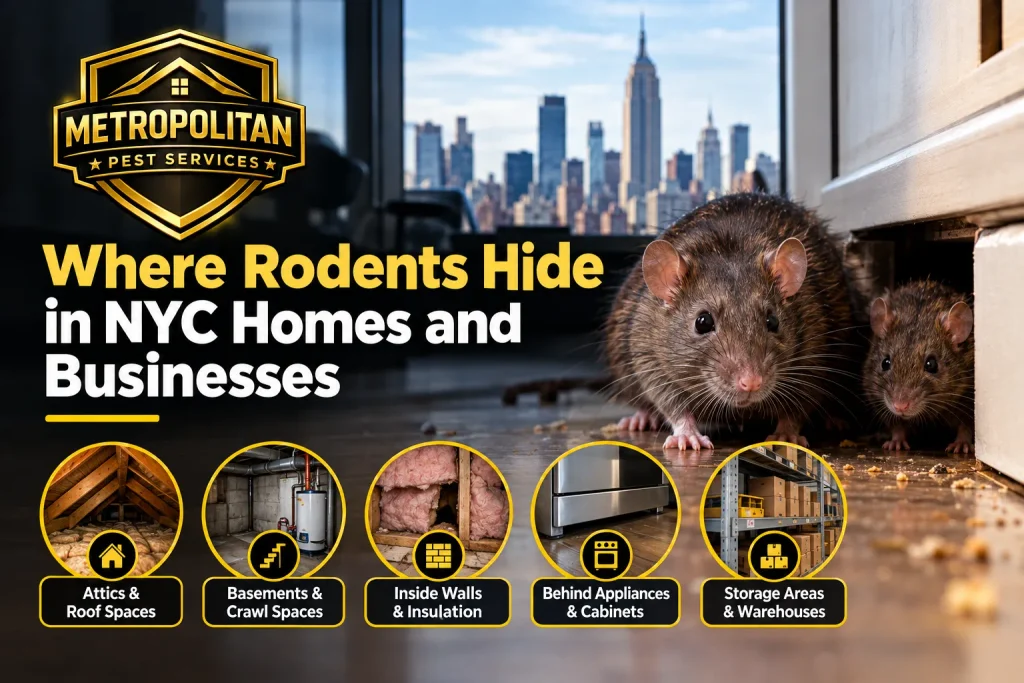
Rodents look for quiet, undisturbed areas close to food and warmth.
In homes: basements, boiler rooms, behind kitchen appliances, inside wall voids, cluttered closets, and garages are the most common hiding spots.
In commercial spaces: dumpster enclosures, loading docks, behind walk-in coolers, storage rooms, and drop ceilings in older buildings are frequent problem areas — often places that don’t get checked during a routine walkthrough.
If you notice other signs of household pests in these hidden areas, professional pest control services can help identify the source and determine the appropriate treatment.
Prevention Steps That Actually Work
Small, consistent changes make a property far less attractive to rodents:
- Store food — including pet food — in sealed, chew-proof containers
- Clean up spills and crumbs immediately, especially in kitchens and dining areas
- Use garbage cans with tight, secure lids and take out trash regularly rather than letting it accumulate
- Clear clutter — boxes, unused equipment, and dense vegetation near the building — that gives rodents cover
- Inspect and seal gaps around pipes, vents, foundations, and utility lines with rodent-proof materials like steel wool or copper mesh
- Repair damaged door sweeps and window screens
These steps work best as an ongoing routine, not a one-time cleanup. Keeping your property clean and addressing access points can also help reduce conditions that attract other pests.
Why DIY Rodent Control Usually Falls Short
Snap traps and store-bought bait can catch a rodent or two, but they rarely solve the underlying problem. If the entry points that let rodents in are still open, and the food source that attracted them in the first place is still available, new rodents will simply replace the ones you caught.
Professional technicians are trained to find what property owners typically miss: entry points behind appliances, gaps in shared walls between units, and nesting sites in spaces that are hard to access without the right tools. For larger properties — apartment buildings, restaurants, warehouses, offices — DIY methods almost never keep pace with the scale of activity.
Rodents are not the only pests that can hide in walls, basements, and other quiet areas. For example, property owners dealing with wood damage may also need to look into termite control.
What to Expect From Professional Rodent Control
A professional treatment plan typically starts with a full inspection, indoors and outdoors — checking basements, kitchens, storage areas, garbage areas, wall voids, and any other likely travel routes.
From there, the plan is built around what’s actually found on the property, not a one-size-fits-all treatment. That usually includes:
- Targeted control methods based on the species and severity of activity
- Specific entry-point exclusion recommendations
- Sanitation guidance to remove what’s attracting rodents
- Follow-up monitoring to confirm the problem doesn’t return
At Metropolitan Pest Services, we focus on finding the source of the activity — not just responding to the signs you can see — because a treatment that doesn’t address entry points is a treatment that doesn’t last.
Choosing a Rodent Control Company in NYC
When you’re searching for “rodent control near me,” speed and price shouldn’t be the only factors. Ask any company you’re considering:
- Do you inspect for entry points, not just treat visible activity?
- Do you serve both residential and commercial properties?
- What does your follow-up process look like?
- Do your technicians have experience with NYC building types specifically?
Local experience matters here more than in most cities. A technician who’s worked in prewar Brooklyn brownstones, Queens attached homes, or Manhattan restaurant kitchens will recognize access points and activity patterns that a generic approach might miss.
Don’t Wait for a Small Problem to Become a Big One
Droppings, gnaw marks, nesting material, and scratching sounds are your property telling you something is already inside. The longer it goes unaddressed, the more it costs — in damage, in health risk, and in the time it takes to fully resolve.
Metropolitan Pest Services provides rodent inspection and treatment for homes and businesses across NYC. We identify how rodents are getting in, not just where they’ve been — and we build a plan around your specific property.
If you’re also noticing insects around your property, you can explore services such as ant control for ant activity or bee control for bee and stinging insect concerns.
Noticing signs of rodents in your NYC home or business? Contact Metropolitan Pest Services today to schedule an inspection.
FAQs About Rodent Control
How can I tell if rats or mice are inside my home? Look for droppings, gnaw marks, damaged food packaging, nesting material, scratching sounds, or unusual odors. Multiple signs at once usually point to ongoing activity rather than a single visitor.
Can mice really fit through small openings? Yes — a mouse can squeeze through a gap as small as a pencil’s width, and a rat needs only about a quarter-sized opening. This is why sealing pipes, vents, foundation cracks, and utility lines is one of the most effective prevention steps.
How can I prevent rodents from entering my business? Keep food sealed and stored properly, manage garbage with tight-lidded containers, reduce clutter, clean spills quickly, and have the building inspected regularly for new entry points.
Is seeing one rodent a sign of a full infestation? Not necessarily — but it’s a strong reason to inspect the rest of the property for additional signs and access points before activity spreads.
How does professional rodent treatment work? It typically starts with a full inspection to identify activity and entry points, followed by a treatment plan tailored to the property, plus sanitation guidance and follow-up monitoring.
When should I call a pest control professional? Call in a professional if you notice repeated signs, hear activity inside walls, find chewed materials, or can’t pinpoint how rodents are getting in — DIY traps alone rarely resolve an ongoing entry point problem.
Take Back Control
of Your Property
Dealing with rats or mice in your NYC home, apartment, office, restaurant, or business? Metropolitan Pest Service provides professional rodent control in NYC to identify entry points, eliminate infestations, and help protect your property.
Effective
Response
Mice
Service Area
CONTROL