How to Identify Bee, Wasp & Hornet Nests in NYC
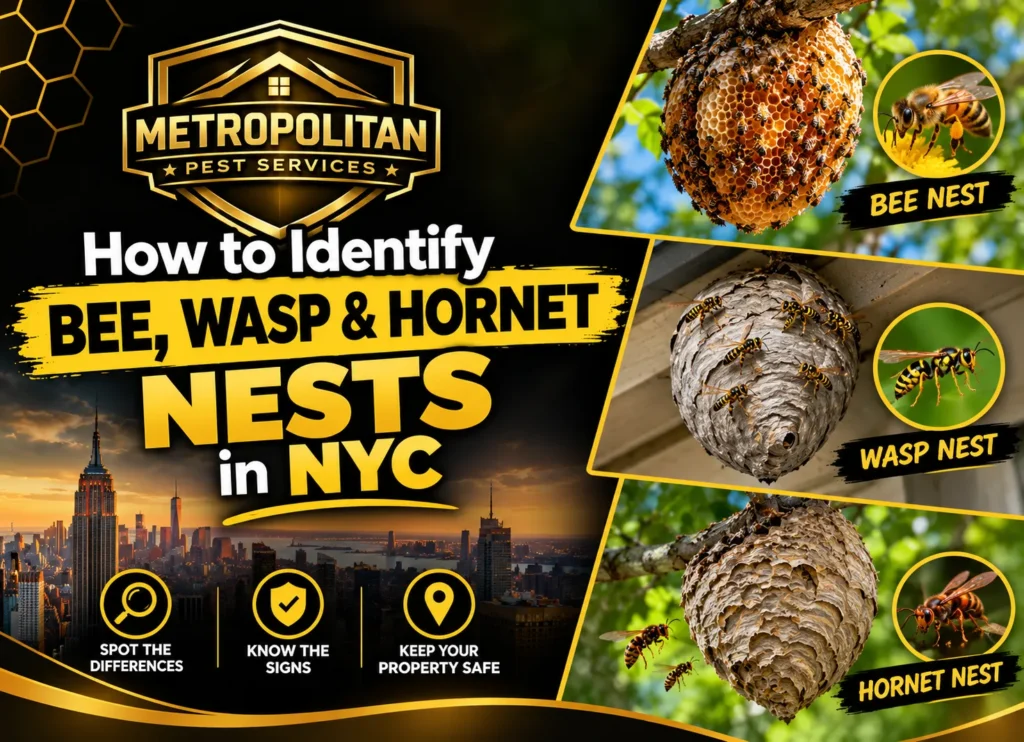
Finding bees, wasps, or hornets around your NYC property does not always mean a nest is nearby. However, repeated insect activity around one location can point to a hidden nest. The nest may sit under an eave, inside a wall, in a tree, or near the ground. Each insect also has different nesting habits and nest shapes. Learning these signs can help you recognize a possible nest before the problem grows. This guide explains where these nests appear, what they may look like, and when professional help makes sense. Most importantly, avoid disturbing an active nest while trying to identify it. Bees, wasps, and hornets have different nesting habits and behaviors. Knowing these differences can help homeowners recognize a potential problem without disturbing an active nest. How to Identify Bee Nests Safely Bee nests can appear in different places depending on the species. Honey bees may form colonies inside wall voids, attics, chimneys, trees, or other protected spaces. Carpenter bees often use small openings in wooden structures. Some ground nesting bees create small holes in soil. Repeated bee activity around one entrance can suggest a nearby colony. You may notice bees entering and leaving the same opening throughout the day. However, visible bees do not always show exactly where the colony sits. Because bees play an important role as pollinators, avoid disturbing an active colony. If bees repeatedly enter a wall, roof, or other structure, professional bee control can help identify the source and recommend an appropriate solution. How to Identify Wasp Nests Around NYC Homes Wasps can build open or enclosed nests in sheltered areas around homes. Paper wasps often create exposed comb nests beneath eaves, porch ceilings, railings, and ledges. Their nests usually have visible cells where young wasps develop. Other wasps build enclosed paper nests that can look like gray or tan balls. These nests may appear around roofs, sheds, shrubs, wall voids, and other protected spaces. A steady flow of wasps entering or leaving one area can help reveal an active nest. However, the nest may remain hidden inside a wall or another enclosed space. Avoid touching or disturbing the nest while trying to locate it. How to Identify Hornet Nests in New York Hornet nests are often larger than many wasp nests and usually have an enclosed paper like covering. You may find them hanging from trees, shrubs, roof areas, or other elevated structures. Bald faced hornets commonly build gray enclosed nests in trees and sheltered areas. Their nests can become easier to notice as the colony grows. When comparing wasps and hornets, look at the nest structure, location, insect behavior, and activity level. Appearance alone may not provide enough information for reliable identification. Where Bee, Wasp and Hornet Nests Commonly Appear Stinging insects can use many protected spaces around urban properties. Common nesting locations include: Some nests remain out of sight, especially when insects use wall voids, roof spaces, or other enclosed areas. Avoid opening walls or disturbing structural cavities because this may make the problem worse. Are Wasps or Hornets Worse for Your Property? Many homeowners wonder whether wasps or hornets create the bigger problem. There is no single answer because the risk depends on the species, nest location, colony size, and activity around the property. A nest near a doorway, patio, walkway, or other busy area creates a greater concern than one located away from people. Wasps and hornets can also become defensive when people approach or disturb their nests. Bees can also become defensive when their colony feels threatened. Therefore, the location and activity around the nest matter as much as the insect itself. Correct identification helps determine the right approach for the situation. How to Get Rid of Bees, Wasps or Hornets Safely If you want to know how to get rid of bees, wasps, or hornets, begin by keeping people and pets away from the area. Close nearby windows and doors if insects are entering the building. Keep outdoor food, sweet drinks, and open trash covered. Avoid fire, smoke, homemade chemicals, and aggressive physical removal. Store-bought sprays can also create risks when nests are hidden or difficult to reach. For professional treatment options, explore Metropolitan Pest Services pest control services to find suitable solutions for your property. When DIY Removal Is the Wrong Choice DIY removal can become difficult when the nest sits in a hard to reach or enclosed location. Problems can also increase when the insect species remains uncertain. Professional help makes more sense when: For urgent pest situations, same-day pest control can provide faster professional assistance. How Professional Bee and Wasp Removal Works Professional removal usually starts with identifying the insect and locating the nest. A technician can inspect insect activity, entry points, nest location, and nearby areas. The next step depends on the species and where the nest sits. Treatment may involve targeted control, nest removal, exclusion work, or another suitable approach. For nests inside walls, attics, roofs, or other difficult spaces, professional bee nest removal can help address the source without unnecessary disturbance to the property. After treatment, the technician can also identify possible entry points and discuss steps that may help reduce future nesting. Why Choose Metropolitan Pest Services? Metropolitan Pest Services helps homeowners and businesses across Manhattan, Brooklyn, Queens, the Bronx, Staten Island, and Long Island. The company provides solutions for bees and other common pest problems. You can review our NYC service areas to see whether your property falls within the locations we serve. If you are searching for a bee exterminator near me, choose a provider that inspects the situation before recommending treatment. Proper identification helps ensure the solution matches the actual pest problem. How to Prevent Future Nests Prevention starts with regular property inspections. Check roof edges, soffits, siding, vents, sheds, decks, and other areas where insects may enter. Keep garbage containers closed and clean outdoor food spills quickly. Seal suitable structural gaps when there is no active nest inside. Do not seal an insect entrance while activity
How to Identify Bee, Wasp & Hornet Nests in NYC Read Post »